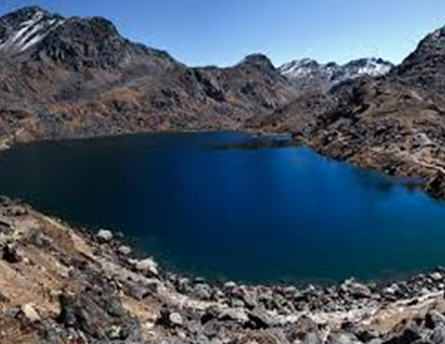
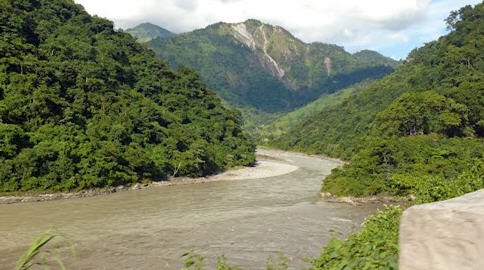
Staggering with extremely burning throat having drunk the venomous poison- which came out while churning the sea- Lord Shiva was wandering with parching mouth in the quest of water. As he reached Gosaikunda, he pierced the trident into the earth from where spring of water has come out. His burning throat was cooled with the water and the place was thus called Gosaikunda and the flowing water came to be named as Trisuli, Trishulganga (holy river flowing out of trident). Lord Shiva is believed to have said himself that one who has a holy dip at this place, and offers dana (charity) can have the grace of Lord Shiva. It is located in Rasuwa district of Bagmati zone to the north of Kathmandu.
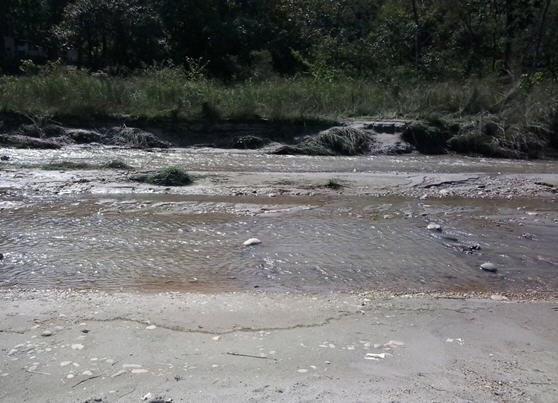
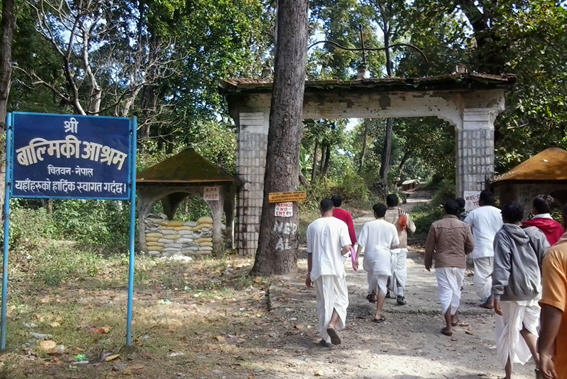
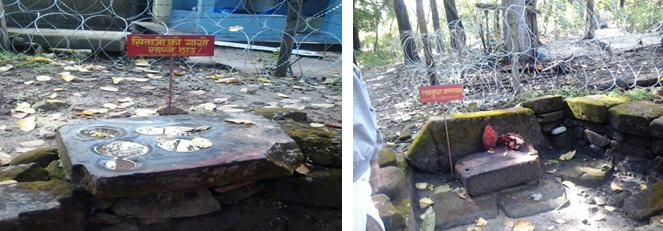
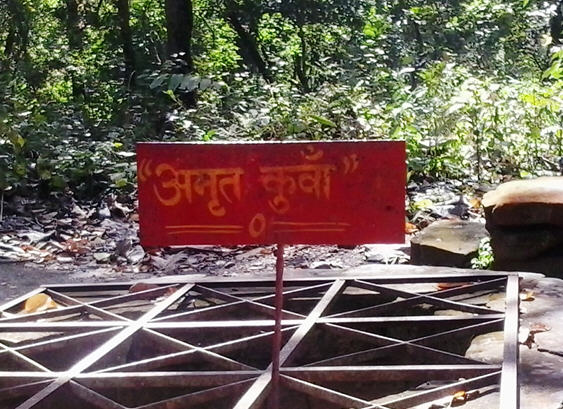
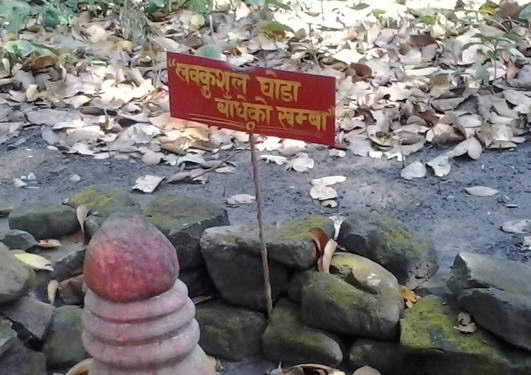
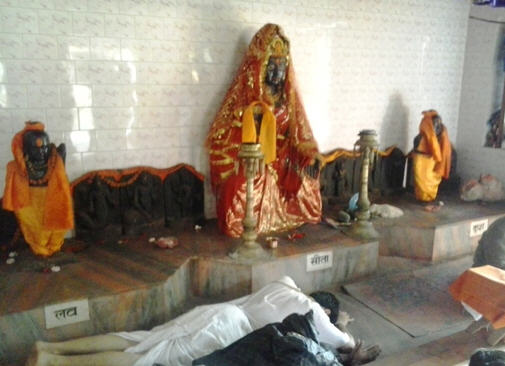
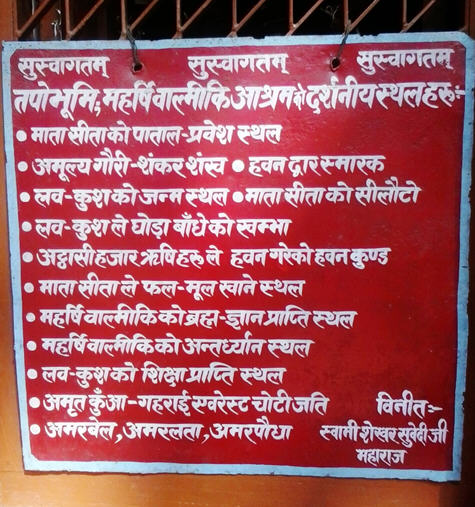
Close by on the other banks of Triveni is also located the famous ashram of Valmiki muni. It is said that Sitadevi was sent here to stay and it was here that Lav and Kush were born. Sage Valmiki muni wrote the famous Ramayan here. This place can be reached either by crossing the river and then walking or directly through a vehicle by entering India border over the Gandaki barrage closeby. This Asrama lies in the chitwan national park zone in a beautiful and well protected jungle. It is mentioned in Ramayan of Valmiki, the ashram is located on the banks of river Tamasa. Today Tamasa river flows in form a small rivulet and is also called Purnabhadra or Tamra bhadra.
Triveni is a town in Katari Municipality in Udayapur District in the Sagarmatha zone of south-eastern Nepal.
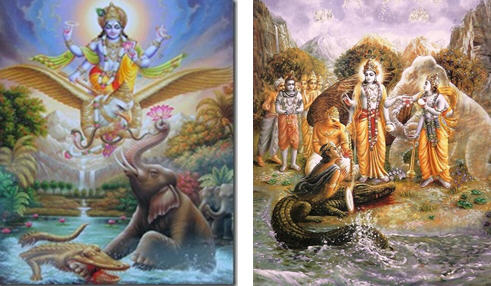
It is also called as Gajendramoksha Divyadham. According to Varah Purana, once upon a time there was a war between an elephant king (Gajaraj) and a crocodile (Graha) that lasted for hundreds of years. Lord Vishnu heard the prayers of the elephant and descended on Garuda to rescue him. As he arrived at the place, one leg of the elephant was already in the mouth of the crocodile. The God safely rescued the elephant from the menacing jaws of the crocodile. This place is situated in Nawalparashi district near the Indian border at the west bank of Narayani River. It is the point where two rivers: Swarnabhadra and Purnabhadra meet Narayani (Gandaki) river.
]
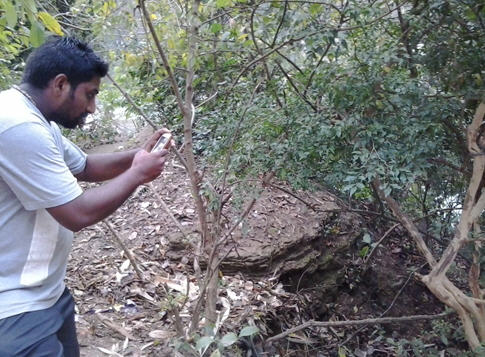
There are many temples out of which Laxminarayana Temple and Gajendramoksha temple are famous. This story of elephant Gajendra moksham is different from that given in Srimad bhagavatam. The one which is described in Srimad Bhagavatam happened in heavenly planet. The one which happened here has similar story line up but involves personalities different as per their past lives. Once there lived two brahmana brothers Yuja and Upayuja who were very expert in reciting mantras and conducting sacrifices. Once a great king invited both for conducting a sacrifice. At the end, the king heavily rewarded the brothers with a huge sum of money. This in turn led to disagreement between both. The disagreement turned into anger and in anger both of them cursed each other. One was cursed to become elephant and other cursed to become crocodile. Being cursed, they both came to their senses and sincerely repented and sought help of Lord Vishnu. Lord promised to deliver both of them in their next life and so goes the same story. This fight lasted for a long time and the distance covered during the fight was took place from Devghat to Triveni and then till Sonpur in Bihar. There are still some places between Devghat and Triveni on the banks of river, where you could find elephant footprints embossed on rocky stones. It was at Triveni, that crocodile grabbed the elephant’s legs and then at Sonpur in Bihar, Lord delivered both the animals. On account of Lord Narayan’s coming and rescuing the elephant, River Gandaki is more prominently called as Narayani river between Devghat and Triveni.
A beautiful bhajan in Hindi sung by Vaishnav saint Suradas on this pastimes is famous :
Hey govind hey gopal raakho sharan ab to jeevan haaren
neer piyan hetu gayaa sindhu ke kinaare
sindhu beech basat grah paav dhari pachhade
chaaron pahar yuddh bhayo le gayo majhdhaare
naak kaan duban laage krishna ko pukaaren
sur kahe shyam suno sharan hain tumhaare
abki baar paar karo nand ke dulaare
Meaning Oh Govind Oh Gopal ,keep me in your shelter as I am loosing my life .
I went to drink the water at the bank of river. In the river there lies an alligator who has grabbed my legs and thus he is drawing me in the water.
Whole day we had a conflict but he taken me to the edge, now my nose and ears are drowned and are calling only Krishna .
Sur das ji says that the elephant says Oh Shyam please listen to me I am only in your shelter .Oh dearest of Nand ji this time you take me across this jolt”.
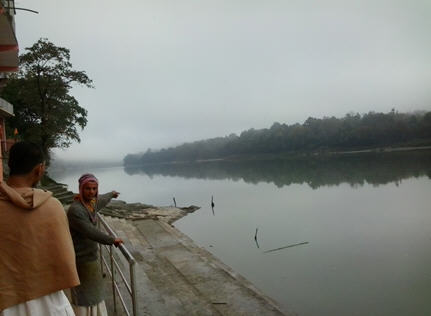
Devghat is the most sacred as well as religious place located in the central part of Nepal. It is located at the tricentre of Tanahun, Nawalparasi and Chitwan as well as at the junction of Gandaki, Lumbini and Narayani Zones. It has an area of 54.34 square kilometers with natural, religious, archaelogical, historical as well as cultural importance. This is the place where the great rivers Kaligandaki and Trishuli meet together. The junction point of these great rivers is known as Beni.
This holy place of Devghat is situated nearby on the main Bhutwal- kathmandu road.
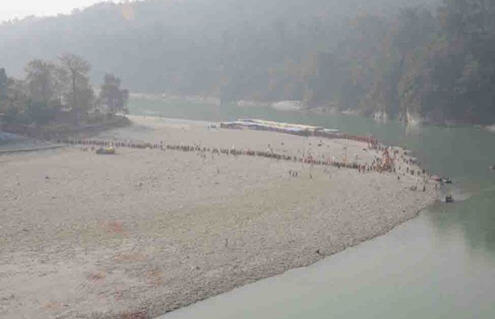
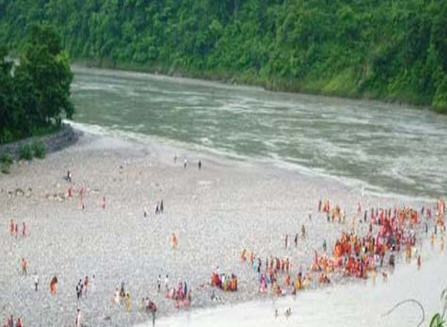
Devghat is the place where Holy river Gandaki from Muktinath meets Holy river Trishuli from Gosaikunda. From here Gandaki river further travels to flow in India through the state of Bihar and joins Ganges at Patna. From here till Triveni, this river Gandaki gets the name Narayani from here till the place Triveni on account of Gajendra Moksha pastime performed by Lord Narayan.
Gandaki has received its name from its origin which is Lord Vishnu’s cheek and Trishuli received its name as Shiva hits his trishul, trident, to get water to cool him down for relieving fire of halahal poison he drank during churning of ocean of milk. As both these rivers meet at Devghat, this place is also called Harihar kshetra. It is said at this place lord Shiva always lives with associates and so also Lord Vishnu lives here too with his own associates. Therefore this place is also named as Harihar kshetra. Devas, demigods, come here to meet both the Lords at one place and when they come, they take opportunity to take bath here. Hence this place got its name as Devghat. Devghat is also the famous place on the banks of which Sage Vasistha muni had his ashram and also where he performed Tapasya. Lord Ram and His brothers during their childhood were sent here by King Dashrath to gurukul of Vasistha muni . Devghat is the place where Lord Brahma did his first yajna here and thereafter this place is also called in Puranas as Adi prayag. As Vasistha muni meditated here, so you can also see the cave here called as Vasistha gufa close by to Devghat’s confluence.
In one kalpa, Lord Ram also did Ashwamedha yajna here. At that time, Valmiki muni brought Goddess Sita and Lavkush from his ashram nearby at Triveni to hand them back to Lord Ram here.Also,it was here that Sitadevi entered the earth during that time.
Gai ghat
Ahead from Devghat on the way to Kathmandu from Buthwal is Gau ghat or Gai ghat. Here King Dilip of Ayodhya came and worshipped a cow regularly during his time. It is a meeting place, sangam, of river Seti and river Trishuli. River Seti (also called Seti gandaki river) originates at peaks of Mt Api and Mt Nampa in the south facing slopes of the main Himalayas. At its place of origin, Mother Gauri (Parvati) gave audience to Vasistha muni and in doing so, she started perspiring due to heat. These perspiration became this river Seti. Nepal is a country of around 6000 rivers.